
# temple
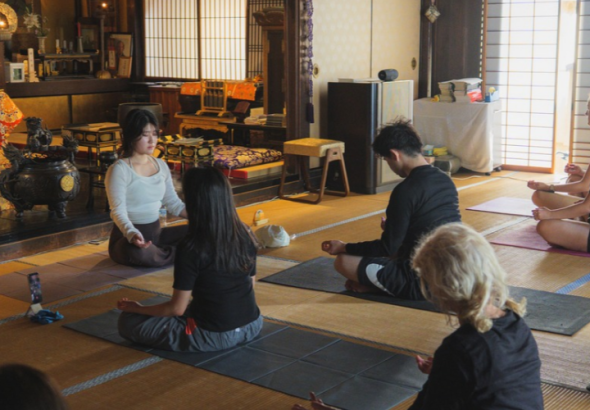
At World Unite!, we now offer sessions with Japan Temple Yoga, where you can reconnect with yourself, share meaningful experiences, and learn from the people you meet along the way. Founded by Nanami, these sessions in Japanese temples bring together people from around the world to practice yoga, exchange languages and make new friends. What began with Nanami’s own search for meaningful connections has grown into a space where cultural exchange happens naturally. Yoga, Watermelon-Smashing and Making Friends Forget the idea that a yoga class has to begin and end on the mat. At Japan Temple Yoga, the fun often continues long after the session. Participants might sit down for a meal together, go for a run or join in local activities such as watermelon-smashing, a traditional summer game in the region. It's a chance to see a different side of Japan while spending time with people you might never have met otherwise. That's what makes experiences like these special. You don't need to have everything in common to get along. Sometimes, sharing a meal, learning a new skill or laughing through a local game is all it takes to break the ice. For anyone interested in cultural exchange, it's also a great way to practice a language in real-life conversations rather than just from a textbook. But How Did It All Start? Sometimes, the best ideas come from experiences we never planned to have. While living in Ireland, Nanami discovered how challenging it could be to meet people and build connections. When she returned to Japan, she faced another problem: finding opportunities to speak English and keep her language skills sharp. Then came Thailand, where Nanami discovered yoga and experienced how much it could transform the way people feel. Back in Japan, she started thinking: what if she could bring all these experiences together? Her love for temples, her passion for yoga and her interest in language exchange became the inspiration for Japan Temple Yoga. The idea was to create a space where people from different countries and backgrounds could meet, perform yoga and learn about Japan from one another. And that's exactly what happens at Japan Temple Yoga today. Different Backgrounds, One Welcoming Space Meeting people from different cultures is exciting, but starting a conversation in another language can feel a little awkward at first. This is why making everyone feel welcome is at the heart of the Japan Temple Yoga classes. There's no pressure to be the most outgoing person in the room or to speak a language perfectly. The goal is to create a comfortable environment where you can relax, connect and get to know one another at your own pace. Once everyone feels at ease, conversations tend to happen naturally. Exploring Japan Solo? Come As You Are Travelling alone doesn't mean you have to do everything alone. If you're visiting Japan solo and wondering how to meet people beyond your hostel or sightseeing group, Japan Temple Yoga offers an opportunity to connect with locals and fellow participants in a relaxed setting. You can make Japanese friends, get recommendations for places to visit and discover things about everyday life that you might not find in a guidebook. Additionally, you will contribute to the upkeep of old temples in Japan that are struggling due to rising costs of maintenance. A part of your fee will go towards the well-being of these temples. And you don't need to arrive with a group of friends. You can show up on your own and leave knowing a few more people than when you arrived. One Class Can Take You Further Than You Think But perhaps, the most meaningful part of Japan Temple Yoga is seeing how these experiences can change people's lives. Japanese participants gain confidence through the classes and later decide to travel abroad. Connecting with people from different countries helped them feel more comfortable stepping outside their usual routines and exploring the world. The connections go both ways. Some people have travelled all the way from Europe specifically to attend a Temple Yoga session in Japan. Along the way, participants have formed friendships and connections that could last a lifetime. So, why not step outside the usual sightseeing routine? Roll out your mat, meet some new people and see where the conversation takes you. You can register for their classes through World Unite! Japan's events page. While at it, you may also find other activities that suit your interests.

While cities like Tokyo and Kyoto offer undeniable charm, truly making your Working Holiday in Japan unforgettable means exploring beyond just the major tourist spots. This gives you the chance to see beautiful nature and historical buildings, meet locals, and really immerse yourself in Japanese culture. One place truly worth a visit is Sado Island, a hidden gem in Niigata Prefecture. Sado Island - Why It’s Worth a Visit Sado Island, Japan's sixth-largest island, is a microcosm of the country itself, boasting diverse landscapes from picturesque beaches and cascading rice paddies to rugged mountain roads. Known for its clear waters, rocky shores, and abundant marine life, Sado offers fantastic opportunities for outdoor activities like hiking and swimming. It also is home to five sake breweries, so why not try some sake while you are there? Beyond its natural beauty, Sado is a hub of traditional culture. It's home to the Kodo Taiko Ensemble, which hosts the annual Earth Celebration Festival. The music festival is a dynamic event of drumming and cultural exchange. Visitors can also try taiko drumming themselves at the Sado Island Taiko Center. Unique experiences like riding a "tarai bune" (a traditional tub-boat) or exploring historic villages like Shukunegi, with its preserved wooden houses, offer a glimpse into the island's rich heritage. Additionally, the Sado Gold Mine, a UNESCO World Heritage site, is a significant historical attraction that offers a fascinating look into the island's past as a major mining center. The island is also a crucial site for the reintroduction of the Japanese Crested Ibis, a species that was once almost extinct in the wild but now thrives on Sado thanks to conservation efforts. A Short History of Sado Island Sado Island has a fascinating and at times tumultuous history, serving for centuries as a place of exile for political figures and intellectuals. The island experienced a significant boom with the discovery of gold and silver mines in the 17th century, which helped finance the Tokugawa shogunate. The Sado Gold Mine, now a UNESCO World Heritage site, attracted people from all over Japan, leading to a sudden rise in population and enriching its cultural diversity. However, nowadays Sado faces a shrinking and aging population, like many areas in Japan. Furthermore, while Sado used to be a popular tourist destination, due to the rise of cheap overseas flights, the tourist numbers have halved. As a result abandoned buildings and even entire villages now dot Sado’s landscape. Historical buildings, including vital temples, are deteriorating. Many of the island's monks, often elderly, struggle to find successors, leading to a profound loss of invaluable cultural heritage. A Unique and Innovative Cooperation Amidst these struggles, new innovative ideas emerged. One of them is the cooperation between World Unite! and Chokokuji Temple. The historic Chokokuji Temple is one of Sado's largest and most significant temples, founded by Kobo Daishi (Kukai) in 807. It is designed to resemble Nara's Hasedera Temple, is not only a spiritual site but also a custodian of cultural assets, including ancient Kannon statues and Heian Period guardian figures. These eleven-headed Kannon statues and only unveiled to the public once every 33 years, with the next viewing set for 2034. Beyond the buildings, the temple grounds are home to three ancient cedar trees, estimated to be over 1,000 years old, believed to hold spiritual power. Recognizing the challenges faced by historical structures like Chokokuji in an aging society, World Unite! is using the temple as a base for an Environment conservation camp. The volunteers support the 87-year-old monk and his wife with the temple's preservation and development. A portion of the program fees directly contributes to the temple’s upkeep, and proceeds from a souvenir shop within the temple, launched in 2024, also go directly to Chokokuji Temple. This unique model helps ensure the temple's future while providing volunteers with an authentic immersion into Japanese culture and temple life. The Mother Nature Environmental Conservation Camp This camp, called “Mother Nature Environmental Conservation Camp Sado Island”, provides a deeply enriching experience for travellers looking to contribute to local life and explore Japan beyond the mainstream path. Participants live in large, fully furnished tents on the grounds of Chokokuji Temple and engage in a variety of activities: Besides temple preservation, the participants also contribute to the conversation of the Japanese Crested Ibis. After World War II, the use of chemical pesticides became widespread. The poisons decimated the Ibi’s food sources to such an extent that in 2003, the bird was considered "extinct in the wild." A government breeding program saved the last captive specimens and successfully began reintroducing offspring into the wild. For the species to survive in the wild, traditional, pesticide-free rice fields and irrigated, fallow Satoyama areas are urgently needed today. Volunteers from World Unite! therefore work together with local rice farmers to promote precisely these traditional farming methods, irrigate unused fields, and thus permanently secure the toki's habitat. Furthermore, in this camp you can participate in beach cleanups and learn how to use bamboo to make sustainable and traditional crafts. You will learn about herbal medicine and engage with local school children by teaching them about environmental protection. Regularly, World Unite! also organizes the participation in workshops on traditional and local culture such as building a traditional reed boat. This program offers a unique blend of cultural immersion, environmental contribution, and personal growth, making it a truly distinctive Japanese adventure. Do You Want to Know More? Does this sound interesting, and would you like to know more? Then check out the projects page:https://www.world-unite.de/en/internships-volunteering/japan/environmental-conservation-cultural-heritage-templestay-sado If you would like to receive support with organizing your Working Holiday, visit the World Unite! webpage at:https://www.world-unite.de/en/working-holiday/japan/work-and-travel-tokyo-kyoto